Dwapara Yuga Blog

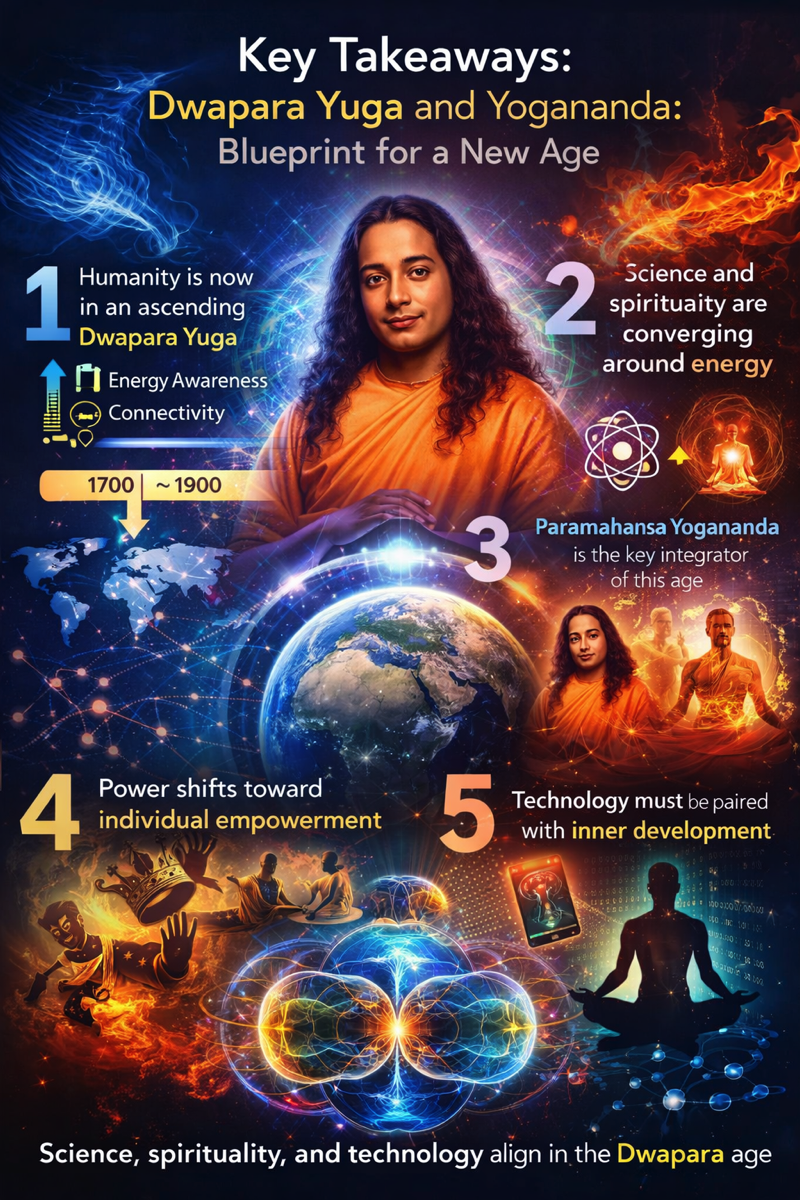
This is a blog around the dawning of Dwapara Yuga, the age of energy. A good starting point is the post "Is this the New Age of Dwapara Yuga?" and for more details, see the "Timeline"Gyanananda.

Yoga-Material

Stacks Image 832
Yoga and Material Success
I first read Swami Kriyananda's course/book on
Yoga and Material Success a generation ago.
I've applied the principles found there, at least what I wasn't already practicing, ever since.
I thought I'd leverage Claude Fable to summarize the book and get to its top 5 recommendations in this age of clickbait and 30-second attention spans!
Summary
The course applies the yoga principles of karma and dharma to worldly success and business through practical themes like attracting prosperity, right attitude, balancing work with meditation, leadership, employer/employee relations, and advertising. It is ultimately about the "right use of ego.
Top 5 recommendations
* Treat setbacks and success alike as karma teaching you something, not as random luck or injustice — respond to difficulty by generating positive, calm energy rather than blame (Lessons 1, 6).
* Shift from a competitive to a "comparative" mindset in work and business: focus on offering genuine value and serving others' needs rather than trying to beat down rivals (Lessons 9, 19, 20).
* Balance ambition with inner stillness — regular meditation sharpens the judgment and energy that practical success actually depends on (Lesson 7).
* Be generous within your means and give without demanding return (nishkam karma); the text argues this, not raw self-interest, is what compounds into durable prosperity (Lessons 1, 2, 25).
* Keep ego in its proper, subordinate role — use it as a tool for focused will and leadership, not as the master of your decisions, since unchecked ego is presented as the root of both business and personal failure (Lesson 26).


Video

Stacks Image 805
Yoga and Material Success
I first read Swami Kriyananda's course/book on
Yoga and Material Success a generation ago.
I've applied the principles found there, at least what I wasn't already practicing, ever since.
I thought I'd leverage Claude Fable to summarize the book and get to its top 5 recommendations in this age of clickbait and 30-second attention spans!
Summary
The course applies the yoga principles of karma and dharma to worldly success and business through practical themes like attracting prosperity, right attitude, balancing work with meditation, leadership, employer/employee relations, and advertising. It is ultimately about the "right use of ego.
Top 5 recommendations
* Treat setbacks and success alike as karma teaching you something, not as random luck or injustice — respond to difficulty by generating positive, calm energy rather than blame (Lessons 1, 6).
* Shift from a competitive to a "comparative" mindset in work and business: focus on offering genuine value and serving others' needs rather than trying to beat down rivals (Lessons 9, 19, 20).
* Balance ambition with inner stillness — regular meditation sharpens the judgment and energy that practical success actually depends on (Lesson 7).
* Be generous within your means and give without demanding return (nishkam karma); the text argues this, not raw self-interest, is what compounds into durable prosperity (Lessons 1, 2, 25).
* Keep ego in its proper, subordinate role — use it as a tool for focused will and leadership, not as the master of your decisions, since unchecked ego is presented as the root of both business and personal failure (Lesson 26).


Takeaway

Stacks Image 780
It's been around 3 years since I first blogged here about AI. Today, generative, agentic, and ambient AI are all around us. I asked ChatGPT to summarize my 2007 book.

Kriya Yoga

Stacks Image 768
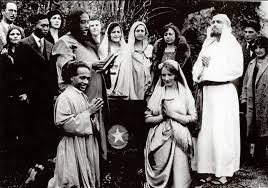
Early picture of Yoganandaji in America

I just came across a Yoganandaji disciple I had never heard of before - Shelly Trimmer - in a 2017 book by Ray Grasse called "An Infinity of Gods."
I found the book to be very enjoyable and recommend reading it for folks with an open mind. There's a second book also, although I found the first to be more impactful.
It has been years since I last came across
any new perspectives around Kriya Yoga and Yoganandaji that were not simply re-workings of older materials.
It was great to find those stories and more around the diversity of teachers that Yoganandaji collaborated with and encouraged in his lifetime.
Shelly wasn't a well known teacher by any means. He was a householder and avoided opening any type of big school.
He unsurprisingly advocates meditation and affiliation with whichever kriya yoga group you feel affinity with (or don't) at this time and place in your life.
I got a kick out of seeing some of the wider-scoped discussions that are not typically covered in group sessions. Yoganadaji himself had to be very careful of what he said, being followed by British agents and religious zealots looking to tear him down.
Reading those more unusual tidbits was like eating at a chef's restaurant with a lot of personality and a few rough edges rather than a national chain where everything is well done at scale but can sometimes feel cold and corporate in striving to offend no one.

Free Trade Hall

Sex Pistols Free Trade Hall
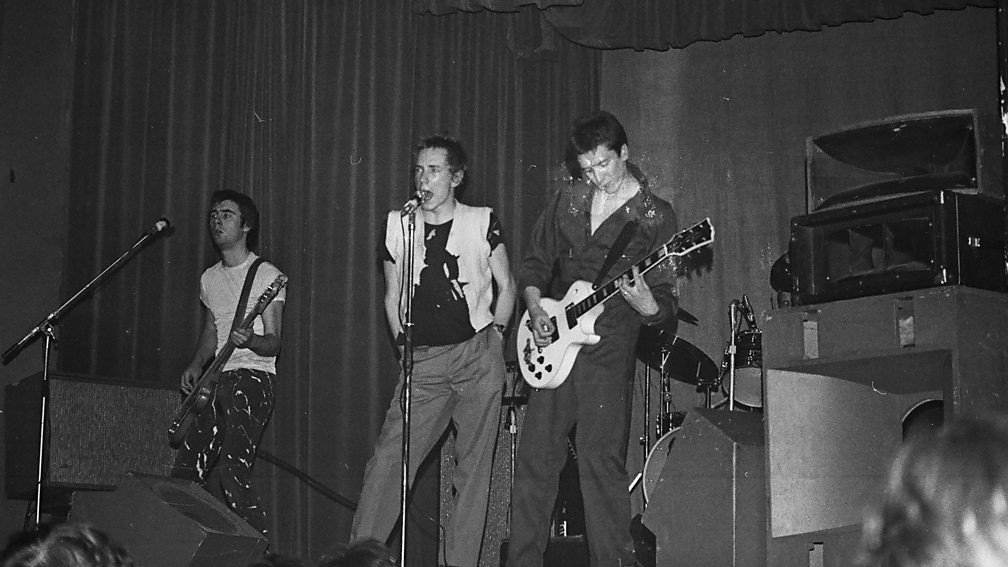
Sex Pistols at Lesser Free Trade Hall 1976 (BBC photo credit)

Manchester, England, was the world’s first industrial city, a beehive of canals, steam power, and mills from the late 1700s that drove global changes in economics, society, and music.

Manchester’s Free Trade Hall opened in 1856 as one of its leading venues. It has been the site of many Dwapara Yuga events and is today a hotel.

It was built on the site of the Peterloo massacre, 1848, the largest political demonstration of the first Industrial Revolution.

The massacre highlighted the plight of a then-new category of people in society --
factory workers in mills, their poverty under the so-called Corn Laws, and lack of representation in Parliament.

The Mill workers were politically active, supported and corresponded with Abraham Lincoln over slavery, ushered in universal voting rights, and inspired the works of Marks and Engels.

The Hall itself celebrates the repeal of those Corn Laws.  It was there that classical music was made available to the general public, as were speakers from Winston Churchill to the Suffragette Movement.

In 1966, Bob Dylan was famously heckled there as a "Judas" for playing an electric set.

In 1976, the Sex Pistols (pictured) played the “gig that changed the world.” It was attended by a tiny audience, who went on not just to consume music but to make it.

Bands formed from that one gig included the Buzzcocks, the Smiths, the Fall, and Joy Division/New Order.  That last group formed
Factory Records and ushered in a new era of electronic dance music based on industrial sounds and rhythms that is heard around the world to this day.

Blue Monday (1980) -
https://www.youtube.com/watch?v=c1GxjzHm5us&t=5s

This website does not collect or use visitors' personal information and does not use cookies or other tracking technologies.
As with most websites, basic technical information (such as IP address and access time) may be automatically recorded by the hosting provider for security and operational purposes. This information is not used by us to identify individuals.
If this changes, this notice will be updated.